
Looking for something specific?
Take a look at our blog categories and get the advice and guidance you need!
Expecting Essentials
becoming a parent is one of the greatest things in life, but it can also be one of the scariest! the uncertainty of what parenthood will bring can spook anyone, but we hope to calm those nerves with a little advice from the experts.

Having a healthy, balanced diet during pregnancy is important for both you and your baby. By eating a varied diet, you can ensure that you’re getting the nutrients you both need to help your baby grow and develop.
Eat Well Guide
A healthy diet doesn’t necessarily mean cutting out all your favourite foods. But instead, changing the number of different foods you eat to achieve a varied diet. The NHS Eat Well Guide makes it easy to understand how much of what you eat should come from each food group.
Cooking a balanced, nutritional meal may be the last thing on your mind when pregnant. Especially during your first trimester, when you may be experiencing sickness or tiredness.
But not to worry, as you don’t have to achieve the right balance in every meal. The NHS states that you should aim to get the balance right over the course of the week.
Myth-busting
A common myth you’ll hear while pregnant is that you’re now ‘eating for two’. However, when you’re pregnant, you don’t need to have larger portions or extra food. The best way to ensure your baby is getting the essential nutrients they need to develop is by trying to achieve a healthy, balanced diet.
It's normal to have an increased appetite during your pregnancy. According to BabyCenter, the reason you feel hungrier is due to changes in your hormones. They explain that even though you may feel ravenous, you don’t actually need any extra calories. It’s only in the third trimester that you need an extra 200 calories a day.

Fruit and Vegetables
Fruit and vegetables are full of vitamins and minerals as well as fibre, which can help prevent constipation. They also release energy slowly, so you feel fuller for longer.
Therefore, you should eat at least 5 portions of fruit and vegetables a day. These can be in the form of fresh, canned or frozen fruit and vegetables. When shopping for canned fruit and vegetables, you should opt for those that are tinned, in natural juice or water, with no added salt or sugar.
Remember to always wash fresh fruit and vegetables.
For more information on what counts as one of your 5 A Day, visit the Eat Well guide.

Important Vitamins and Minerals in Pregnancy
A healthy, varied diet should help you get most of the vitamins and minerals you need during pregnancy. However, the NHS recommends pregnant women to take a folic acid supplement and a vitamin D supplement.
Folic Acid
Start taking folic acid as soon as you begin trying for a baby or as soon as you find out you're pregnant. The NHS advise you to take a folic acid supplement that contains 400 micrograms (mcg) every day until the end of your first trimester. It’s important to follow this advice as folic acid can prevent neural tube defects such as spina bifida.
Vitamin D
Vitamin D is essential for healthy bones and muscles. During autumn and winter (between October and early March), the lack of sunlight means we cannot make the vitamin D we need. Therefore, you should consider taking a daily vitamin D supplement containing 10mcg.
Vitamins You Should Avoid
During your pregnancy, you should avoid supplements and multivitamins containing vitamin A (retinol). Too much vitamin A can harm your baby’s development. This also includes liver products such as fish liver oil.
If you’re unsure or have any doubts about vitamins and supplements. We recommend speaking to a healthcare professional.
Food and Drink to Avoid During Pregnancy
There are certain food and drink you should avoid while you’re pregnant. Some are more obvious than others, like alcohol. But others may surprise you.
Below is a condensed list of food and drink you should avoid:
- Raw or undercooked meat
- Game meats such as partridge
- All types of pâte
- Liver and liver products
- Raw shellfish
- Shark
- Swordfish
- Marlin
- Unpasteurised milk and dairy products
- Mould-ripened soft cheeses (unless cooked until steaming hot)
- Soft blue cheeses (unless cooked until steaming hot)
- Soft goats’ cheese (unless cooked until steaming hot)
- Raw or undercooked eggs that aren’t British Lion eggs
- Alcohol
- More than 200 mg of caffeine per day
We suggest you ask your GP or midwife for a full list of food and drink you should avoid while pregnant.
A Happy, Healthy Pregnancy
The most important thing to remember during your pregnancy is to eat a variety of foods to help achieve a balanced diet. Healthy eating doesn’t have to feel like a chore.
Remember, you can still enjoy your favourite foods. But just keep in mind that if sugary food and drinks are your favourite treats. You need to have these less often and in small amounts.
For further advice and guidance, speak to your doctor or midwife. Before making any changes to your diet, make sure you speak to a healthcare professional.

Your baby won’t stay so small forever, and before you know it, your baby will be crawling from one end of the room to the other. Its a good idea to start thinking about potential dangers in your home before they get to this stage. The babyproofing process is important to avoid any unnecessary accidents to keep your little one safe.
What is Babyproofing?
If you are a first-time mum, babyproofing your home will be a whole new experience for you. Unfortunately, it isn’t one of the most exciting parts of becoming a mum. In fact, it can be quite stressful. This is why preparation is essential.
Babyproofing your home simply means removing anything that can cause harm to your baby and taking precautions to make your home a safe place.

Where to Start?
The best way to babyproof your home is to look at each room in your house through the eyes of your baby. We recommend you go into each room and get on your hands and knees as if you were crawling like your baby. Take into consideration what is within easy reach, sharp edges and any furniture they may use to help them stand up. As crazy as this sounds, it will give you a ‘tots-eye-view’ of each room.
When is the best time to Babyproof a Home?
When your baby arrives, you will be occupied with feeding, changing and settling them into their new routine. So we recommend doing the majority of child proofing before they arrive. During pregnancy, most women find the second trimester a lot easier than the first. Therefore, you may find this the best time to start.

Safety around the House
Multiple babyproofing tips can be applied to all rooms of your house. You may want to start with these first.
-
Keep all small objects out of reach – make sure that there aren’t any loose change, buttons or button batteries within reach of your baby. Check down the sides of your sofa and the floor to be sure you have removed any choking hazards.
-
Blind cords – can be a strangulation hazard if they are loose and within reach of your little one. Ensure that you tie them up, cut them shorter or use blind cord safety devices.
-
Furniture – take into consideration any furniture that could topple over if your baby was to use it to help them stand up, for example, a bookshelf or a set of chests of drawers. This type of furniture should be anchored to the wall.
-
Electrical cables – are another strangulation hazard, and your baby may be tempted to chew them. Hide any electrical cables or keep them out of reach.
-
Electric sockets – that meet British Standard 1363:1995 have an inbuilt safety system. You should avoid using socket covers as they could make your plug socket less safe.
-
Sharp edges – some furniture in your house will need corner and edge guards.
-
Cleaning products – can be harmful to your baby and need to be locked away.
-
Medicines – babies and toddlers may mistake medicine for food or sweets. Keep them away from your little one in a locked cupboard.
-
Stairs – will require baby gates at the top and bottom.
-
Doors – will need door stoppers, and some may need finger guards over the hinges.
-
Cupboards – there are many safety devices to choose from that will help keep your little one from getting into cupboards and draws.
Baby and You
Before your baby can crawl or walk, you will spend a lot of time carrying them around in your arms, especially in the first few weeks when skin-to-skin contact is advised. And your baby is comforted by being close to you.
It is important there are no trip hazards on the floor. And you are always aware of your surroundings. Remember, you won’t be able to do day-to-day things like making a hot drink while holding your little one.
Other Safety Tips to Consider
-
Fitting smoke detectors
-
Purchasing a children’s first aid kit
-
Taking first aid training and downloading an app to use at home
-
Don’t leave windows open or unlocked
-
If you have a fireplace, make sure it is babyproofed
-
Ensure houseplants aren’t poisonous
Don’t Forget
Your child should always be supervised by yourself or another responsible adult.

As part of Child Safety Week, we are looking at car seat safety, concentrating on the different factors you should consider when shopping for a child-safe car seat.
-
Is it TUV and FAA aircraft approved for travel?
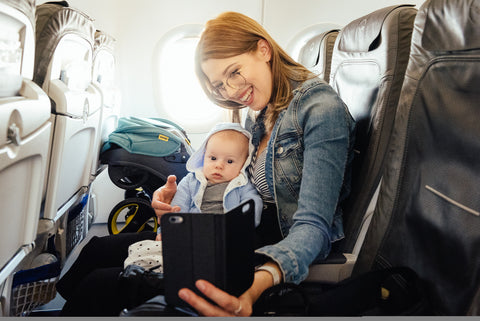
Now that Covid restrictions have lifted. Many families will be planning their first holiday with their little ones. If you are considering travelling abroad this summer, you have probably already contemplated taking your baby’s car seat. However, you may not have checked whether its TUV and FAA aircraft approved for travel.
You can check this by simply looking for the label on your car seat. It should read, “This restraint is certified for use in motor vehicles and aircraft”.
Even if it is TUV and FAA approved, you should still contact the airline to ensure its okay.
-
Don’t buy a second-hand car seat
You may currently be preparing for the arrival of your baby and shopping for the essentials you will need to keep your little one safe, comfortable and happy. One staple you’ll need is a car seat. The NHS recommends not buying a second-hand model as it could have been damaged in an accident. It also may not have all its original parts or instructions.
-
Do you need a car seat that is part of a travel system?
There are many different models, designs and styles available. But knowing the difference between them can be difficult, especially when you want the best for your baby.
One term you may come across when searching for a car seat is ‘travel system.’ Most travel systems contain a pushchair alongside a compatible Group 0+ car seat. Although, some do come with a carrycot as well as other accessories. These are popular with parents that are on the go and want a car seat and stroller in one. To fit in with their busy lifestyles.
-
Is your car seat EU-approved?
In the UK, there are two different types of car seats you can purchase – height-based seats and weight-based seats. Below you will find the requirements for each.
Height-based seats – As stated on the gov.uk website, only EU-approved height-based child car seats can be used in the UK. These have a label showing a capital ‘E’ in a circle and ‘R129’.
Weight-based seats – As stated on the gov.uk website, only EU-approved weight-based child car seats can be used in the UK. These have a label showing a capital ‘E’ in a circle and ‘ECE R44’.
-
Does your car have ISOFIX connectors?
An ISOFIX base makes fitting your baby’s car seat easier. But, more importantly, ensures that it is secured correctly.
Most new cars have ISOFIX connectors. However, if you are unsure. You can usually find them hidden between the padding of your car’s seats. Alternatively, you can check your car’s handbook.
-
Will you be using the seat in any other vehicle?
Having time away from your baby when they first arrive is unlikely to cross your mind. Your first few weeks together are a precious time for bonding and trying to develop a new routine. But at some point, you will feel ready to leave your baby with their grandparents or a friend.
Therefore, when shopping for a car seat, you will need to keep this in mind. It will not only need to fit your car. But also family and friends who will be looking after your child.
-
How long can a baby stay in a car seat?
It is important to remember that car seats are designed to keep babies safe while travelling and not as somewhere for them to sleep when outside of the car. The Lullaby Trust recommends that babies should not be in a car seat for longer than 2 hours at a time. And they should be taken out frequently.
They also advise that when travelling in a car with an infant, an adult should be sat in the back of the car with them to ensure they’re safe
and comfortable.


-
The benefits of a rear-facing car seat
Ultimately, rear-facing car seats are much-safer and offer better protection than forward-facing car seats. It’s also a legal requirement for children under 15 months to travel rear-facing.
-
Practice fitting the seat before your baby is born
Leaving the hospital to return home for the first time with your new arrival is a special moment for all parents. You will be filled with a range of emotions, ranging from excitement to nerves. It’s completely normal to feel nervous or anxious about the start of your new journey with your little one.
One thing that you don’t want to have to worry about when leaving the hospital or birth centre is fitting your baby’s car seat for the first time.
-
Babies are more vulnerable to injury than adults
When choosing a car seat for your baby, their safety should be at the forefront of your mind. Babies need protection that adults don’t. This is because of their physical traits, such as their proportions.
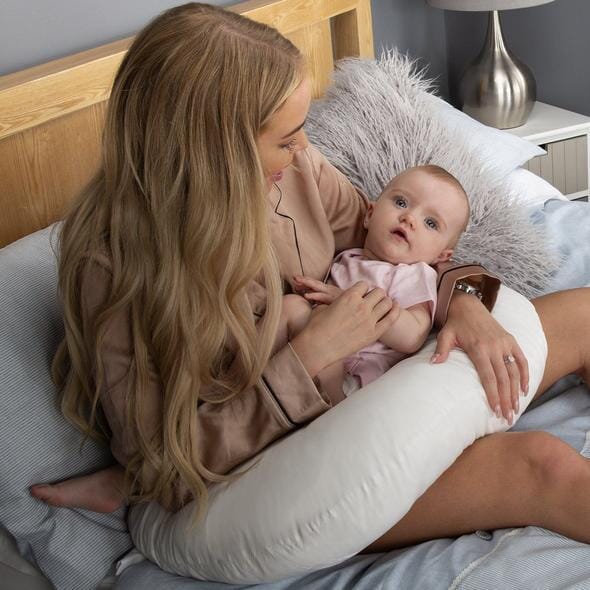
Nursing pillows can sometimes get forgotten about in the never-ending list of things you need to purchase before the arrival of your baby. Although they are not deemed an essential for mums-to-be, they are definitely a useful product to help you and baby feel more comfortable during feeding.
What is a Nursing Pillow?
A nursing pillow, also known as a breastfeeding pillow, is a C shaped or U shaped pillow that supports you and your baby during breastfeeding or bottle feeding. They wrap comfortably around your body, adapting to your shape and providing a safe place for your baby to rest as they feed. You will find them in a range of prints and styles. But essentially, they are all designed to help make nursing easier and to reduce neck, arm and back strain for you.

Our Mother&Baby Feeding & Infant Support Pillow
Can I use a Feeding Pillow After a C-Section?
A caesarean birth might make breastfeeding more difficult due to several reasons, such as loss of mobility or a long and stressful labour. However, with extra support from your midwife, you should be able to find a breastfeeding position that is comfortable for you. One position that the NCT recommends is the ruby-ball or underarm position, as it might help keep your baby away from your scar. They further suggested that you may want to place a pillow under your arm to help support your baby's weight after they have latched on. Other C-section friendly positions they advise are lying down on your side and laid-back breastfeeding.

Why Should I Buy a Nursing Pillow?
Nursing pillows are especially handy if you plan on breastfeeding your baby. Lactation consultant Wendy Wisner advises keeping baby close with skin-to-skin contact during the first few days of breastfeeding. She explained, “This way, anytime your baby looks for the breast, it will be right there. Rooting, head bobbing, fist sucking, mouth fluttering—these are all signs your baby is hungry.”
Trying to maintain skin-to-skin contact for long periods of time can become tiring for your arms. You may find it even more uncomfortable if you have had a caesarean. Therefore, having a breastfeeding pillow to help support the weight of your baby can make the experience more enjoyable for the both of you.
What if I’m Expecting Twins?
If you are expecting twins and want to breastfeed them, you may want to consider tandem feeding. For this, a twin feeding pillow will help you and your babies find the perfect latch position.

Things to Consider When Choosing a Nursing Pillow
- Is it washable? – It is worth considering whether the pillow itself is washable or if it comes with a removable cover that can be washed.
- Does it have a certified organic cotton cover? – To avoid your baby’s sensitive skin encountering any nasty chemicals or dyes, you will need to ensure that the cover is GOTS certified (Global Organic Textiles Standard).
- The shape – As we mentioned earlier, most nursing pillows are either C shaped or U shaped. Before your baby arrives, we recommend shopping around and trying each shape to find the most comfortable pillow.
- Is it adjustable? – Many feeding pillows are adjustable and feature a strap or belt to secure the pillow around your waist.
Support Pillows and Your Growing Baby
You can continue to use most feeding pillows as your baby grows to help them with their key development stages. The pillows can be used to support baby with tummy time and sitting up. The NHS advises to only do tummy time when your baby is awake and alert. You should never leave your baby on their own propped up by a nursing pillow.





check out our latest articles

CuddleCo's Essentials for Your Nappy Station
A simple guide for busy parents – with tips and smart essentials from CuddleCo. When you’re navigating life with a newborn, the smallest mom...
read more
Introducing Your Baby To Your Fur Baby
Expanding the family from just pets to human baby? Here’s some tips and tricks of how to introduce your pet to your baby: Pets are instinctive cre...
read more
CuddleCo's 1st Trimester Guide
Pregnancy can feel exciting, overwhelming and emotional, often all at once. That’s why we’re starting a new Sunday Series, designed to support y...
read more
How to Convert Your Cot Bed into a Toddler Bed
Turning your cot bed into a toddler bed marks an important moment in your child’s development - and with CuddleCo, it’s easy to do. (Applies...
read more
The CuddleCo Wedge Changing Mat Guide: Safe, Comfortable & Styled for Modern UK Nurseries
Nappy changes are one of those everyday moments that quickly become routine - but the right mat can make changing time calmer, safer and far more...
read more
CuddleCo's 1st Trimester Guide
Pregnancy can feel exciting, overwhelming and emotional, often all at once. That’s why we’re starting a new Sunday Series, designed to support y...
read more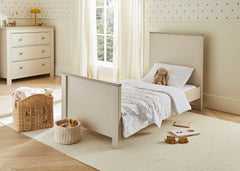
Why Convert Your Cot Bed into a Toddler Bed?
When you’re choosing nursery furniture, you want pieces that feel timeless and last beyond the baby stage. That’s exactly what a cot bed offers,...
read more
One name, two sizes – what’s the difference?
We get this question a lot, so we've put together a simple guide to help you choose the right fit for your space. Parents often ask us about the di...
read more
Etta vs. Marley: The Ultimate Nursing Chair Showdown
Spoiler alert: everyone wins (especially you and baby). When it comes to setting up your nursery, there’s one hero piece that often gets overlooked...
read more